Patient Councils prepare to lead service improvement through the Community Scorecard
Citizens’ experiences with Primary Health Care can help identify problems that require solutions. The Community Scorecard provides a structured way for these experiences to be discussed with service providers and managers and translated into shared priorities and action plans. To keep this process active at the local level, the Accessible Quality Healthcare (AQH) Project is supporting Patient Councils in preparing to lead the process themselves.
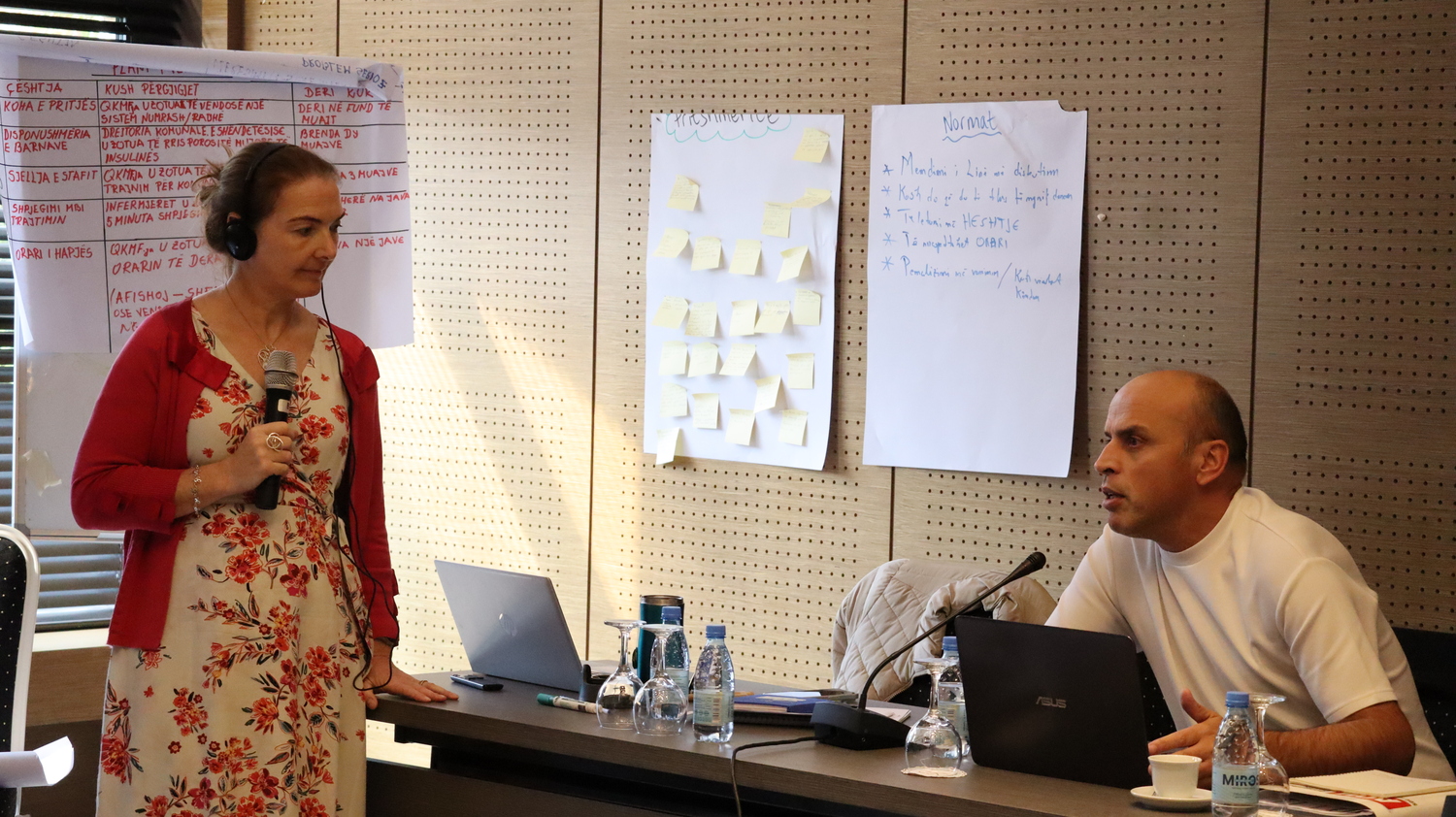
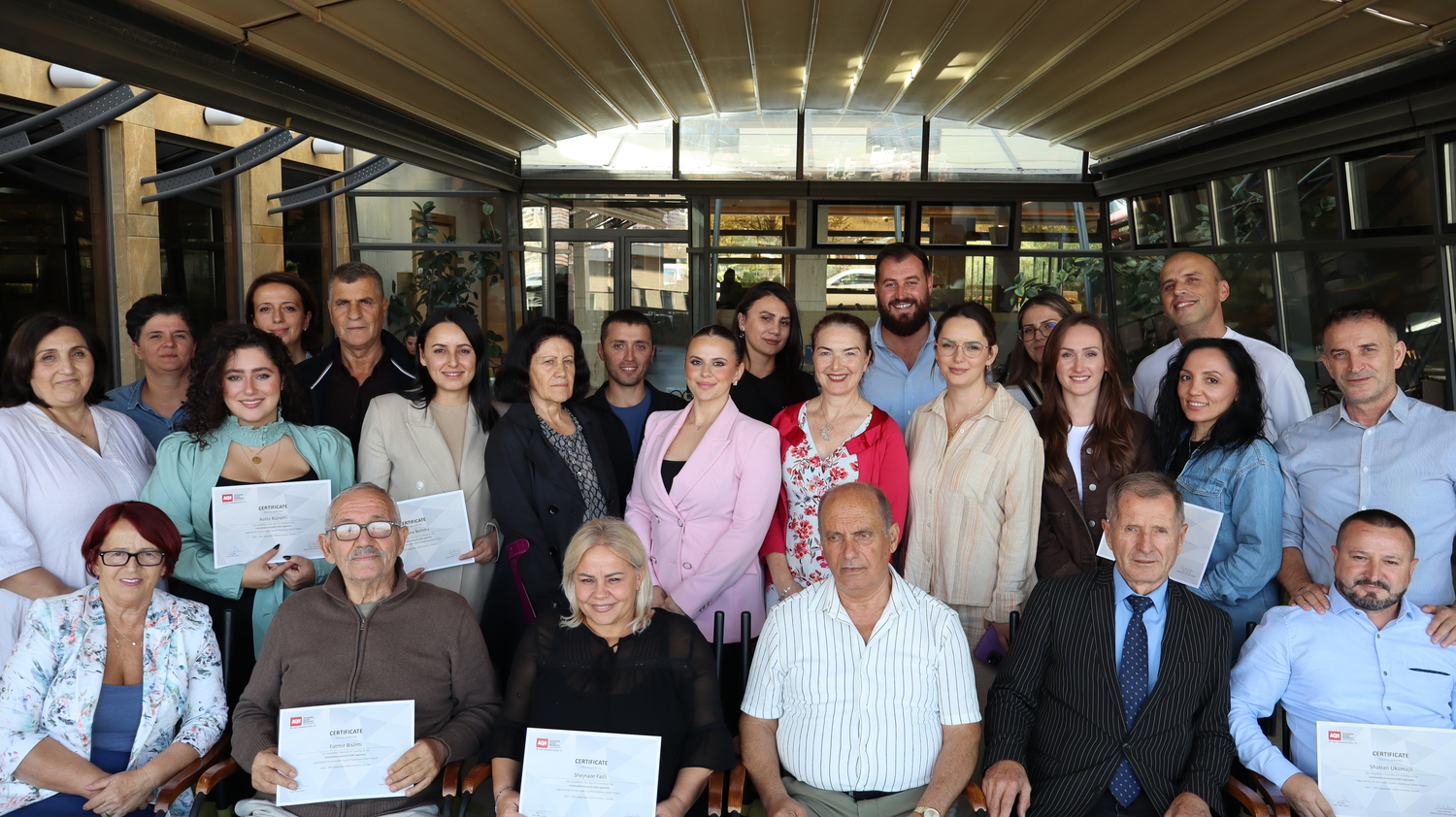
In this context, a four-day training of trainers was held, with the support of international expert Paula Valentine, for Patient Councils from nine municipalities. The training aimed to strengthen their skills in facilitating the Community Scorecard cycle and dialogue between citizens and primary health care institutions.
The Community Scorecard, introduced by AQH as part of its work on social accountability, enables citizens to assess the quality of services and engage constructively in their improvement. Patient Councils are the key community structures through which this dialogue takes place.
The programme combined an explanation of the model with practical exercises facilitated by the participants themselves. They worked on rights and responsibilities, identifying priority issues within the community, developing the scoring matrix, and organising the joint meeting with service providers. The sessions also covered conflict management and the development of a joint action plan.
These skills are important for moving the process from assessment to action. Local facilitators need to create space for different perspectives, help participants agree on priorities, and guide the discussion towards concrete steps for improvement.
Preparing Patient Councils for this role is a step towards sustaining the approach beyond project support. The aim is for the capacity to organise and lead the Community Scorecard cycle to remain within the municipalities, making dialogue between the community and health services a process that local structures can continue independently.
The training is part of a broader mission to further adapt and implement the model in Kosovo. Updating the facilitation materials and drawing lessons from implementation will help define the next steps for its sustainability and expansion to other municipalities. The intended long-term benefit is a more active role for citizens in improving primary health care through a locally led mechanism.