From the Experience in Korça to More Dignified Palliative Care in Kosovo
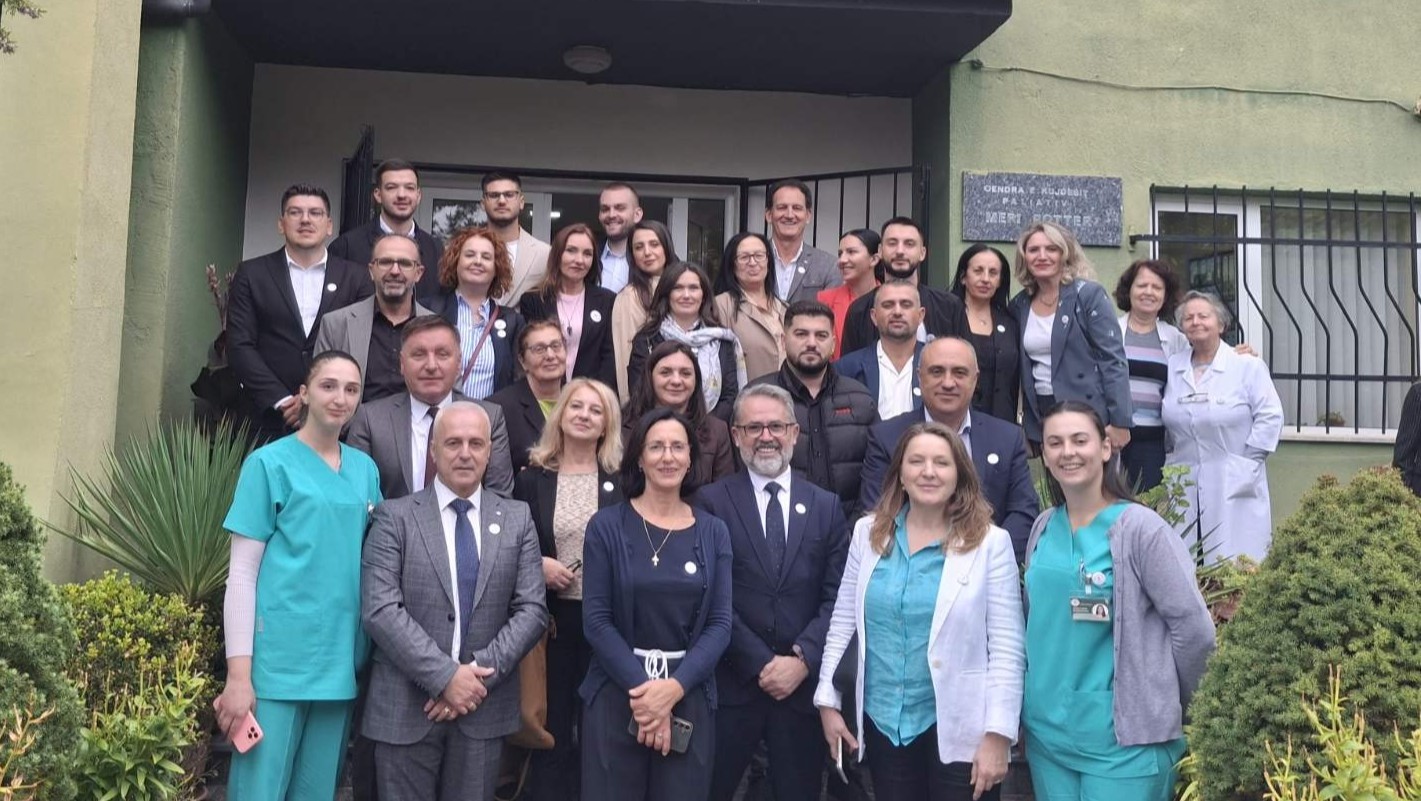
A study visit to the “Mary Potter” Palliative Care Centre in Korça, Albania, brought together 25 representatives from Kosovo from 8 to 10 October 2026. The visit combined learning from practical experience with a review of Kosovo’s draft Action Plan for Palliative Care. Before leaving for Korça, Dr Shaban Osmanaj had clear expectations: to learn how palliative care is organised in Albania and to identify experiences that could help to develop palliative care service in Kosovo. His interest covered the entire patient journey: from admission and referral to pain and symptom management, multidisciplinary teamwork, family support, and care in the community or at home.
As access to palliative care is increasingly recognised as an essential component of Universal Health Coverage, improving its availability and accessibility has become a priority in public health policy. As chair of the working group responsible for drafting the Action Plan for Palliative Care across all three levels of healthcare in Kosovo, Dr. Shaban Osmanaj saw the visit as an opportunity to connect health policy work with experiences of professionals who provide day-to-day care.
Ahead of the visit, Osmanaj explained, “an action plan is more useful and easier to implement when it also takes into account the practical experience of institutions and professionals who have already been through this process”. He expected discussions with colleagues in Korça to help assess the objectives and priorities of the draft Action Plan, making it more concrete, achievable and responsive to patients’ needs. For Leonora Bakija, the visit was directly linked to her work at the Main Family Medicine Centre in Gjakova. As a quality coordinator, nursing trainer and Vice-President of the Chamber of Nurses, she aimed to gain knowledge that she could transfer to her own institution and share with colleagues.
“I see the experience gained not only as a personal benefit, but also as an opportunity to pass it on to healthcare staff through training, the exchange of practices and quality improvement initiatives”, Bakija emphasised before departure.
Learning from Experience Grounded in Practice
The visit was supported by the Accessible Quality Healthcare (AQH) Project, in cooperation with the Ministry of Health and representatives of healthcare institutions from Gjakova, Lipjan and Prishtina.
Meetings with the centre’s team allowed participants to learn about the organisation of services, multidisciplinary care, the referral system, and support for patients and their families. Discussions covered the challenges of providing this care: preparing staff, ensuring ongoing training and securing resources for sustainable and equitable services.
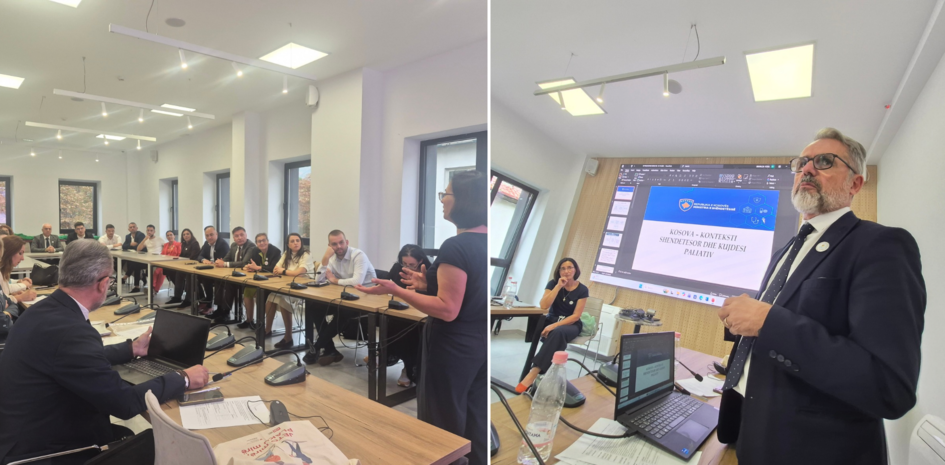
For the host team, sharing experience is part of their commitment to making palliative care more accessible. In her statement to Albanian Radio and Television (RTSH), the centre’s director, Dr Irena Laska, emphasised the importance of sharing knowledge and skills with colleagues from Kosovo and the region to support the development of services where patients need them. The study tour included a workshop to review Kosovo’s draft Action Plan for Palliative Care. Participants discussed its objectives and proposed measures for developing palliative care services in Kosovo, including institutional responsibilities, implementation timelines and measurable indicators. Particular attention was given to strengthening coordination between primary healthcare and hospital services, developing home-based care, providing ongoing professional training and ensuring adequate resources.
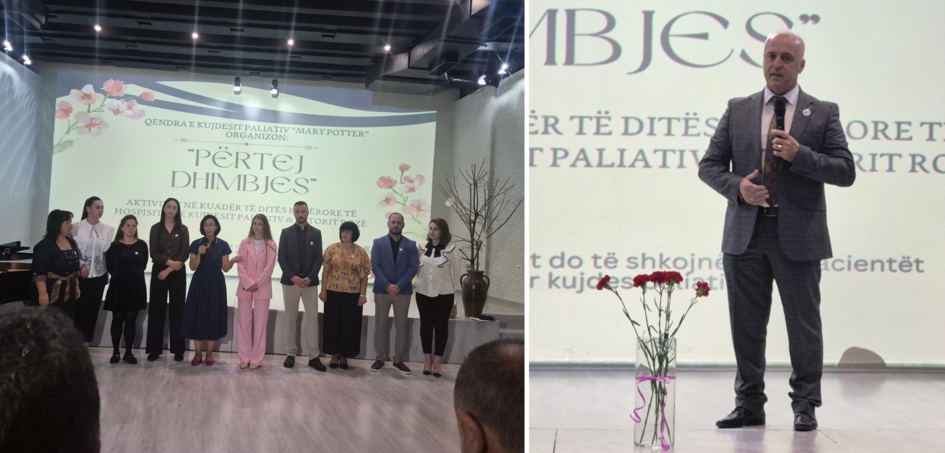
Participation in the awareness-raising activity “Beyond Pain” reinforced the human dimension of the visit: behind every diagnosis is a person who needs care, support and respect.
From Expectations to Lessons Learned
After returning, Osmanaj described the visit as a valuable experience, both professionally and on a human level. Learning about the centre’s work and discussions with colleagues from Albania provided ideas for developing services in Kosovo, highlighting the need to adapt good practices to local conditions and capacities.One of the key lessons he highlighted was the importance of a comprehensive approach: alongside treating physical symptoms, care should address patients’ psychological, social and spiritual needs, as well as provide support to their families. Collaboration among professionals and coordination between services are essential to ensuring continuity of care.
“The most important lesson is that every palliative care service must place the patient - their needs, dignity and quality of life - at its centre, along with the family, who needs support throughout the care process,” Osmanaj emphasises after the visit.
The activity “Beyond Pain” made a particular impression on him, highlighting the importance of being present and caring for people facing serious illnesses. Reflecting on the visit, Osmanaj emphasised that developing palliative care also requires community awareness and involvement.For him, the Action Plan workshop was an important benefit. The discussions and recommendations helped identify the elements needed for an implementable plan: clear objectives, defined responsibilities, ongoing training and interinstitutional cooperation.
Experience Gains Value When Applied in Everyday Work
For Bakija, the visit was an opportunity to broaden her perspective on service organisation and interprofessional collaboration. It reminded her that improving care requires knowledge and standards, supported by leadership, communication and teamwork. Applying these lessons at the Main Family Medicine Centre in Gjakova remains one of her main goals. Bakija sees opportunities to strengthen the role of nurses and the culture of quality, contributing to more coordinated and comprehensive care. “For me, the success of a study visit is measured not only by the experience itself, but also by the value it brings to our everyday work and the positive changes it can inspire in the future,”, she says. Both participants’ reflections converge on the same goal: turning the knowledge gained into action. For Osmanaj, the visit provides a basis for further cooperation and the development of more coordinated, accessible and higher-quality palliative care services in Kosovo. For Bakija, finalising and implementing the Action Plan will help translate lessons on service organisation, teamwork and the role of nurses into sustainable improvements in everyday care.
With AQH’s support, the visit connected the policymaking process with practical experiences in delivering care. Its long-term value will be built through the work that follows: sharing knowledge with colleagues, strengthening cooperation and adapting practices to the needs in Kosovo.
The expectations before departure and the reflections after returning remain linked by the same responsibility: ensuring that patients and families are at the centre of care, with greater support, continuity and dignity at every stage of life.